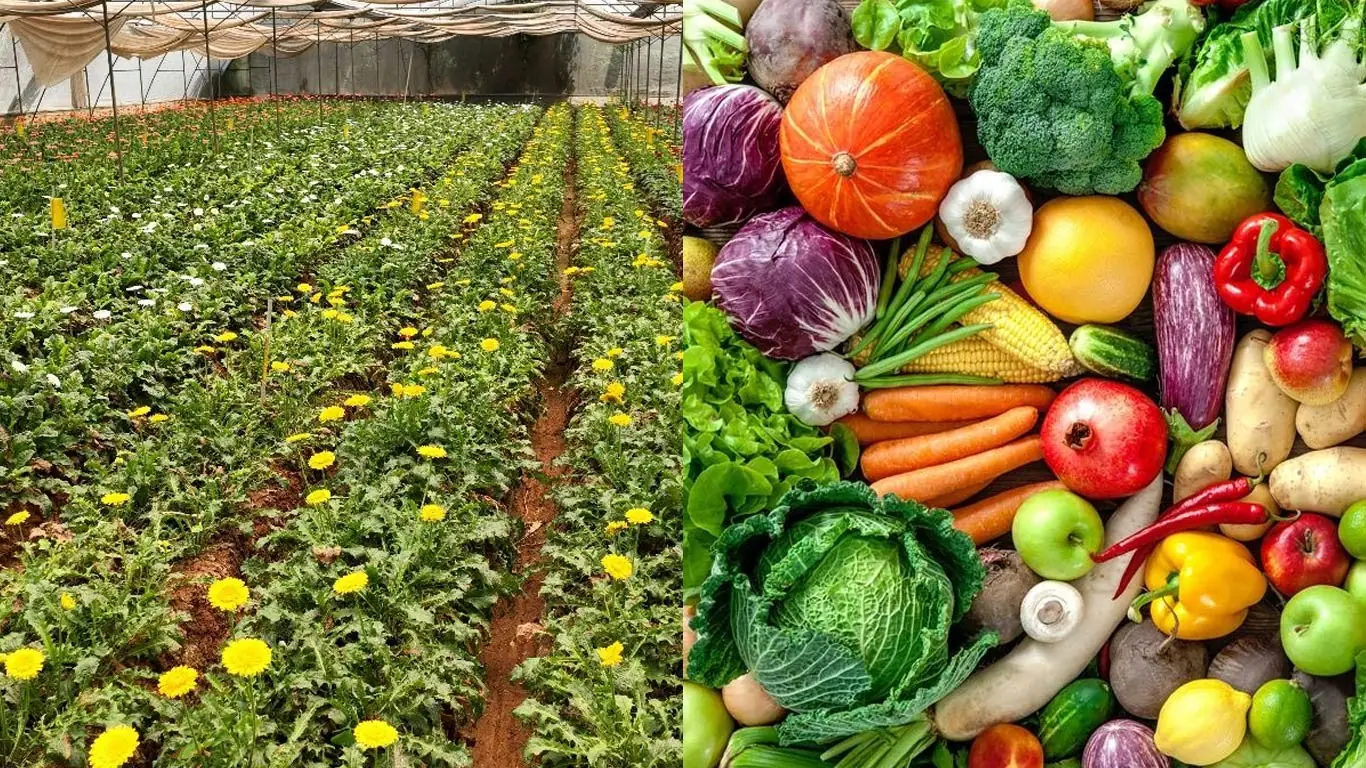
🌸 Horticulture: The Science of Cultivating Plants and Gardens
🌿 Introduction
Horticulture is the branch of agriculture that deals with the cultivation of fruits, vegetables, flowers, and ornamental plants. It focuses on improving plant growth, productivity, quality, and aesthetic value. The term “horticulture” is derived from the Latin words hortus (garden) and cultura (cultivation), meaning “garden cultivation”.
📘 Definition
Horticulture is the art and science of growing fruits, vegetables, flowers, and ornamental plants for human use and enjoyment. It includes plant propagation, breeding, crop production, and landscape design.
🌾 Major Branches of Horticulture
1. Pomology
The branch of horticulture that deals with the study and cultivation of fruit crops such as mango, apple, banana, and grapes.
2. Olericulture
This branch focuses on the production of vegetable crops such as tomato, potato, onion, and spinach.
3. Floriculture
It involves the cultivation and management of flowering and ornamental plants used for decoration and commercial purposes. Examples include rose, marigold, and jasmine.
4. Landscaping and Gardening
This branch is concerned with the design, construction, and maintenance of gardens, parks, and green spaces for beauty and recreation.
5. Post-Harvest Technology
It focuses on the handling, processing, and preservation of horticultural products to reduce wastage and increase shelf life.
6. Plant Propagation
This branch deals with various techniques like cutting, grafting, layering, and tissue culture for producing new plants.
🌻 Importance of Horticulture
- Provides nutritious food such as fruits and vegetables.
- Generates employment opportunities for rural and urban youth.
- Improves environmental quality by increasing green cover.
- Supports export and earns foreign exchange for the country.
- Enhances landscape beauty and promotes mental well-being.
- Encourages sustainable farming practices and biodiversity conservation.
🌼 Advantages of Horticulture
- High productivity per unit area.
- Improves soil fertility through organic waste recycling.
- Less dependency on rainfall due to irrigation systems.
- Ensures nutritional security through diverse crops.
- Promotes agro-tourism and ornamental gardening.
- Increases farmers' income through value-added products.
🧪 Modern Techniques Used in Horticulture
- Drip and sprinkler irrigation systems for efficient water use.
- Tissue culture for rapid multiplication of disease-free plants.
- Use of greenhouses and polyhouses for year-round production.
- Organic farming and biofertilizers for eco-friendly cultivation.
- Use of precision farming technologies like sensors and drones.
🏛️ Government Schemes Related to Horticulture in India
- National Horticulture Mission (NHM): Promotes production of fruits, vegetables, and flowers.
- Mission for Integrated Development of Horticulture (MIDH): Supports holistic growth of the horticulture sector.
- Rashtriya Krishi Vikas Yojana (RKVY): Provides financial assistance for infrastructure and technology.
- Horticulture Cluster Development Program: Aims to improve productivity and quality through cluster-based approach.
⚠️ Challenges in Horticulture
- Climate change and irregular rainfall patterns.
- Lack of proper storage and cold chain facilities.
- Pest and disease management issues.
- Limited market access for small farmers.
- High cost of planting materials and inputs.
🌺 Conclusion
Horticulture plays a vital role in improving food security, environmental sustainability, and economic development. With the adoption of modern technologies and proper government support, the horticulture sector has the potential to transform rural livelihoods and contribute significantly to national growth.